
13. Windfield House & Estate.
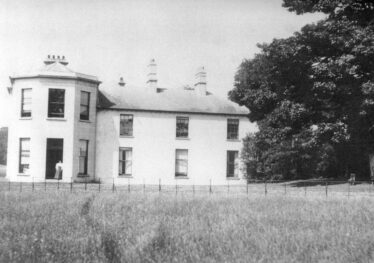
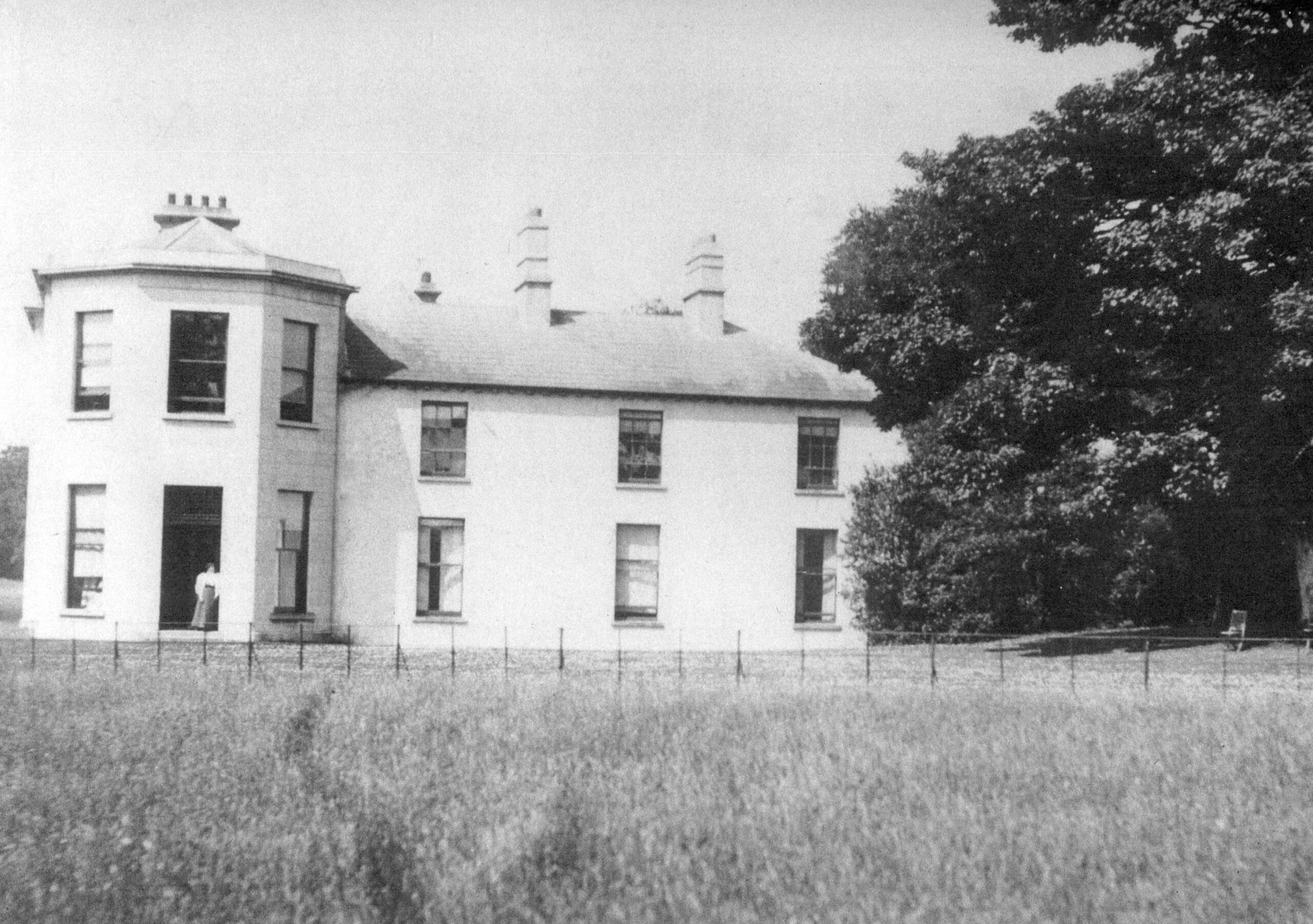
Windfield House & Estate, Windfield Demesne.
In 1641 this was in the ownership of Lord Clanmorris, a considerable Catholic landowner in this locality. Following the Cromwellian invasion of the late 1640s, then known as Turloghgarrandana, was bestowed on the Protestant, and powerful, Earl of Clanricarde who owned much of the land within the entire County of Galway. The disintegration of the Clanricarde estate began with the sales and mortgages of the high-spending 4th Earl and the large unsecured borrowings and unredeemed mortgages of the 5th Earl.
Ownership of Windfield would pass to another prominent family, the Blakes, when they acquired this area in 1703. Under the will of John Blake, dated February 27th 1786, the estate then passed to his cousin John Blake of The Heath, County Mayo. The Blake family, one of the fourteen tribes of Galway, became established in the west of Ireland in the Anglo-Norman period and reputed to be of Welsh origin. The name derives from Richard Cadell, or Caddle, who was also known by his cognomen ‘Niger’ or ‘le Blak’’ (i.e. ‘the Black’). Their property interests centered mainly in an area in the town of Galway. In this locality, the Blakes initially had their residence in Mullaghmore while they built Windfield House, circa 1771, and established a walled and moated demesne. Mixed marriages and the effects of the Penal Laws were factors peculiar to Galway families and particularly the Blakes. In 1823 Henry Blake, by this time residing in Edinburgh, brought an action for divorce against his wife on the grounds of adultery. The original family records of the Blakes of Windfield and Mullaghmore had been handed down in the senior line of that family and they almost became a victim of the domestic troubles at Windfield. After the estate was sold in 1824, Henry Blake put little value on his family records and in 1835 he sold these to his friend and neighbour, Michael Browne of Moyne. Browne preserved the collection and presented them, in 1870, to Maurice Blake of Tower Hill in Mayo and these records remain an invaluable source of information as they date back to their first grant of land in Galway in 1278.
The Jamesons, who purchased the estate in 1824, were a Dublin family well known in the 19th century distilling and banking circles of that city. James Jameson, who bought the Windfield estate from the Blakes, was succeeded by his eldest son, the Reverend John Jameson in 1847. The family continued to occupy Windfield until the early 20th century, while they also had a residence at the Dublin suburb of Montrose. That house still stands on the grounds of the RTE studios. John Jameson’s brother, Andrew, was grandfather to Guiseppe Marconi who today remains an iconic figure in the world of communication as the inventor of the wireless. The Jamesons were originally from Alloa in Scotland and John, who founded the Dublin distillery in 1780, was a lawyer by profession when he married Margaret Haig. The Haig family was already well established in the whiskey business in Scotland and had extensive whiskey interests in Dublin. John and wife Margaret acquired the Bow Street Distillery in Dublin in 1780, hence the whiskey brand Jameson 1780.
By the turn of the 19th century, a mere twenty years later, it was the second largest producer in Ireland and amongst the largest in the world, producing one million gallons of whiskey annually. Reverend John Jameson leased this demesne to James Lynch for much of his life, as he ministered in the city Warwick, while the affairs of his tenants, for the remainder of the estate in Windfield and Mullaghmore, were managed by the Kirwans of Tuam who acted as land agents to many County Galway estates. Reverend John Jameson was succeeded by his son James Francis Jameson who returned to reside at Windfield House in the 1870s following a military career. James Francis and his wife Helen Maud Jameson, who was also his first cousin, had one child, a son, Maurice Eyre Francis Bellingham Jameson, known locally as ‘Master Maurice’ and he succeeded to the estate before it was purchased by the Land Commission in 1917 and allocated to local tenant farmers and residents thereafter.
No Comments
Add a comment about this page