
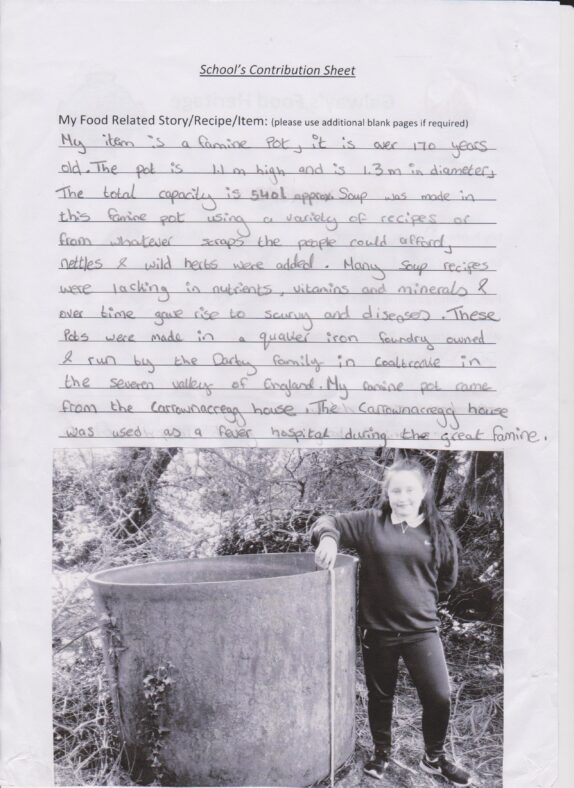
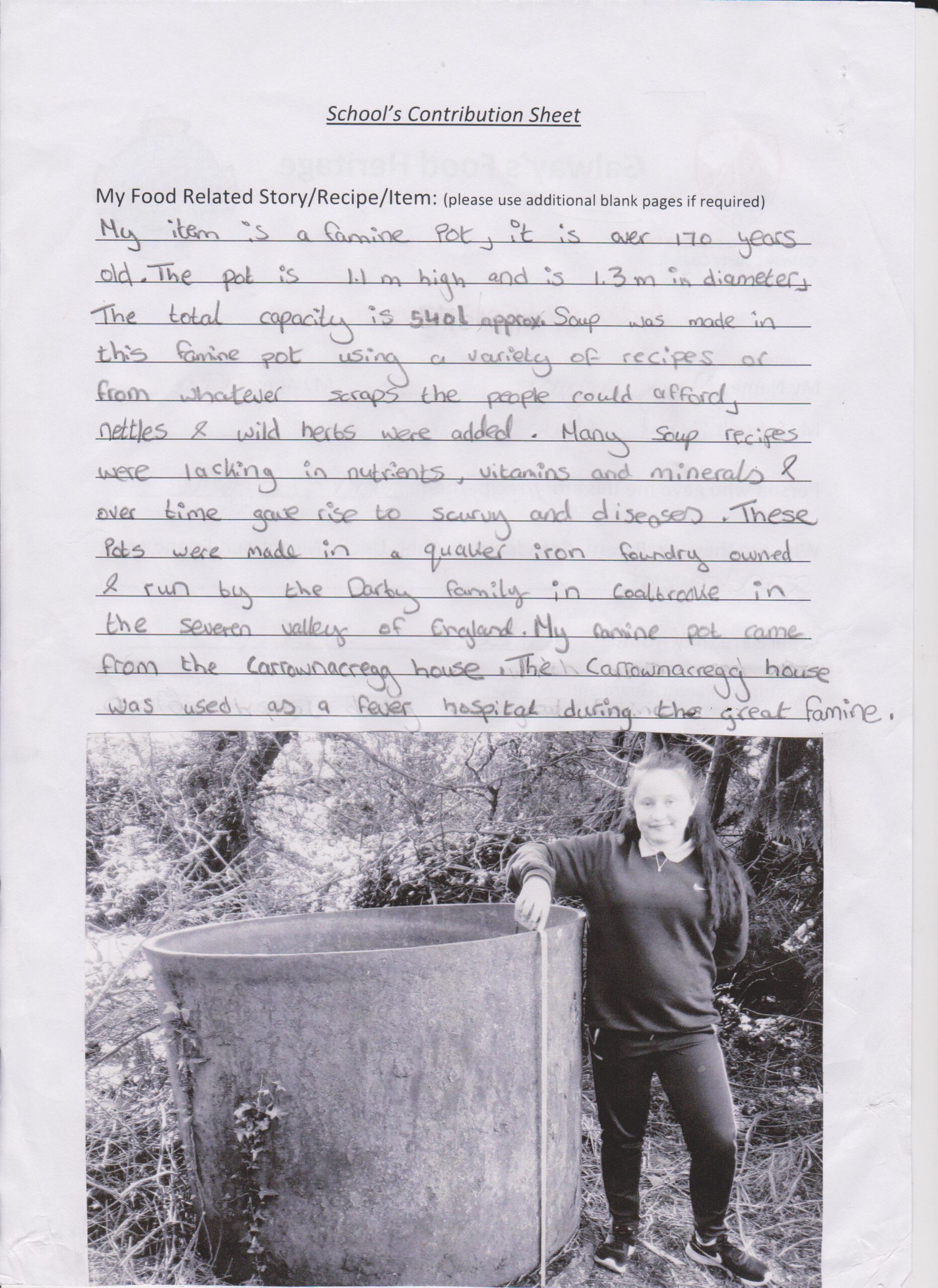
A Gastronomy Project in 2018 initiated by Galway Heritage Officer Marie Mannion and Galway County Heritage Office along with primary school children the existence of this famine pot was brought to life.
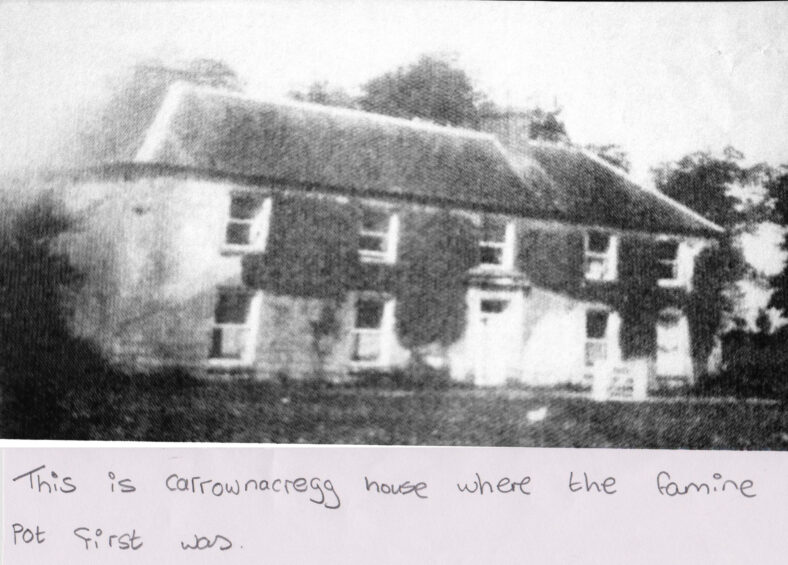
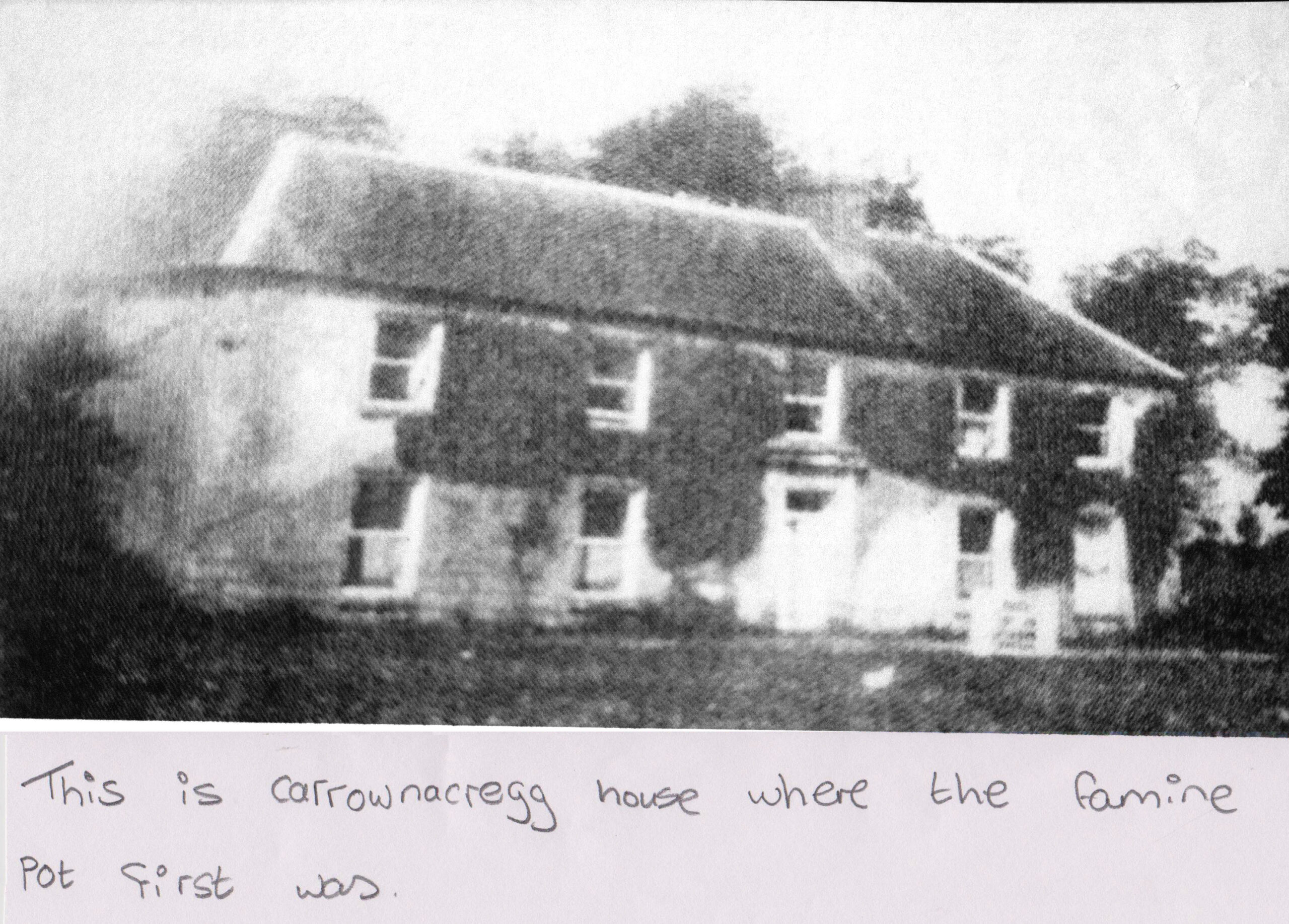
Amy Cosgrove, from Menlough National School, wrote her project on the famine pot at her family farm. The Cosgrove family decided to donate this famine pot to Portumna Workhouse and it was such a fitting memorial to Amy’s father, Pat, who passed away at a young age in 2021. The pot was originally used in Carrownacregg House and this along with many other items were disposed of during land divisions and sales in the early 1900s.
It took some time and organisation to finally be moved safely from the Cosgrove farm and prepare its destination setting. On the weekend of the 6-7th of July 2024 the famine pot finally made its way safely to the workhouse. This was all done through the Cosgrove family, local volunteers and the workhouse staff. It will continue to be safe and available to view at the workhouse museum and to be enjoyed as an attraction by its visitors in the years to come. Donations like these are extremely important with significant heritage value locally and nationally. We extend our sincere gratitude to the Cosgrove family for this great gesture.
It is also significant to note that during the Great Hunger, Carrownacregg House was used as a fever hospital. It had been idle for a few years prior to the famine. A petition was sent to Dublin to the Commissioners of Relief for financial assistance to open a relief hospital in the area and when the the permission was granted they opened up Carrownacregg House. A doctor was appointed and a number of patients were taken in. It was written afterwards, by a Dr. Butler in his medical report on November 7th 1849 that 471 people had been treated, of which 141 had died. It was reported as being one of the highest rates around the country as a fever hospital.
The overcrowding was to great and the deaths so regular that a man was appointed to take away the corpse and bury them. The late Nicholas Hughes, who would later be born in that house, recalls hearing from older people that corpses were buried locally in sandpits and it was said you could hear crying at night coming from the sandpits, and this was called ‘clois na scread’. By 1850 upwards of 245 people had died there.
No Comments
Add a comment about this page